Heavy-Ion (Carbon-Ion) Therapy in China
What it is, who it may be evaluated for, what it costs in writing — and how we coordinate the process end to end.
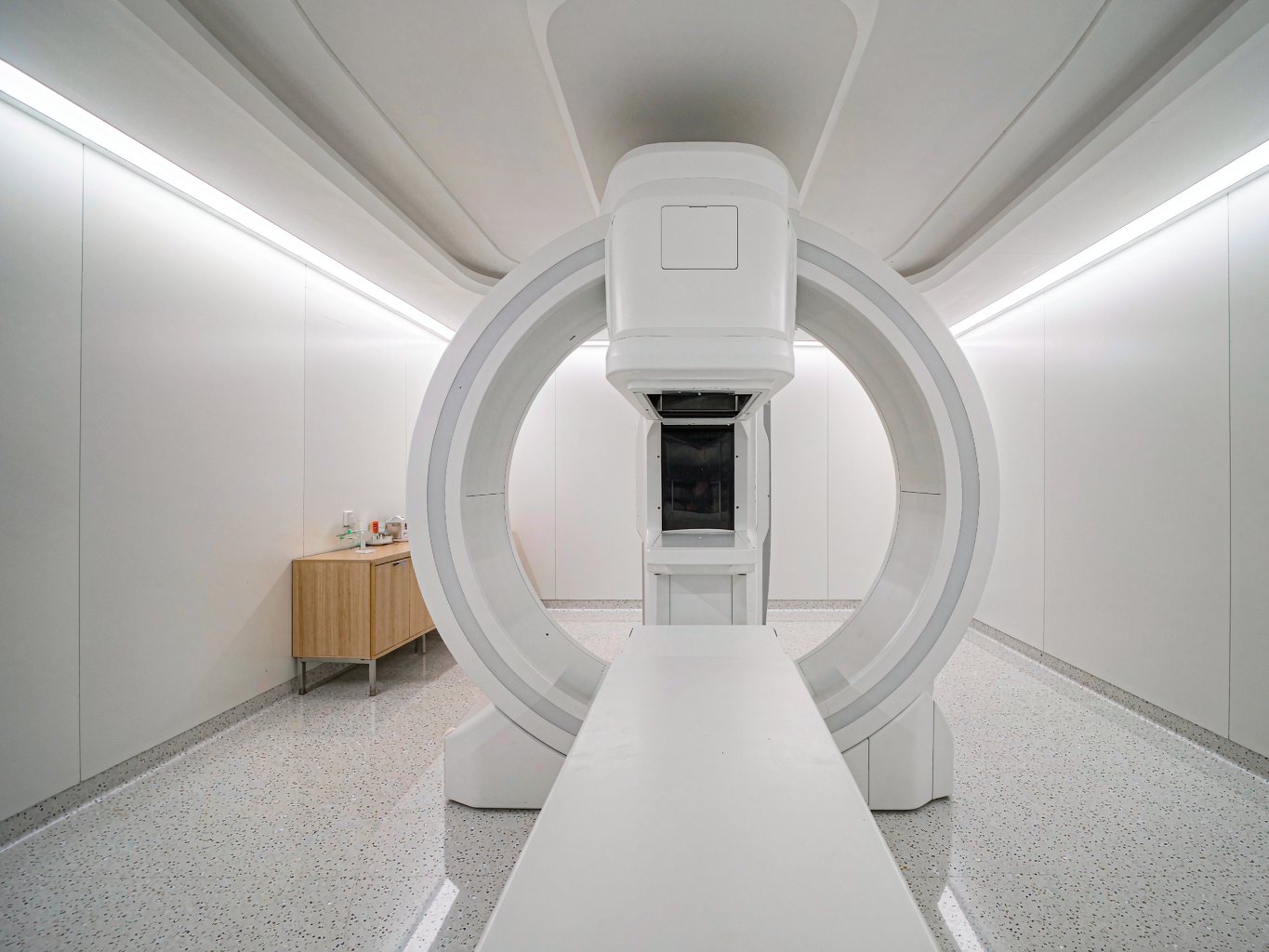
What is carbon-ion radiotherapy?
Heavy-ion therapy uses accelerated carbon ions to deliver radiation that concentrates its maximum energy inside the tumor, with a sharp dose fall-off beyond it. It is a form of particle therapy offered at a limited number of centers worldwide, including centers in Japan, Germany and China. In China, carbon-ion therapy is in routine clinical use at dedicated centers.
Commonly reviewed indications
Centers commonly evaluate carbon-ion therapy for cases such as:
Including sacral and skull-base chordoma — a classic carbon-ion indication.
Evaluated depending on stage and prior treatment.
Including tumors near critical structures where conventional surgery is difficult.
Re-irradiation cases are often reviewed case by case.
What a written quote looks like
Received in writing from a heavy-ion center's international department (October 2026). Your case receives its own written quote before any commitment.
| Item | Amount |
|---|---|
| First treatment fraction (first lesion) | ≈ $7,000 |
| Each additional fraction | ≈ $2,300 |
| Radiotherapy charge cap for the first lesion | ≈ $28,000 |
| Second and additional lesions | + ≈ $7,000 initial fee each |
| Hospitalization (ward, nursing, exams) | ≈ $7,000 – 8,500 |
| Typical total, single lesion | ≈ $35,000 – 36,000 |
How do the results compare?
The cleanest comparison for carbon-ion radiotherapy is against Japan — the birthplace of the technology and home of the world's most experienced heavy-ion program. Shanghai Proton and Heavy Ion Center is now the world's largest carbon-ion center for nasopharyngeal cancer:
| Measure | Shanghai (heavy ion) | Japan (heavy ion) reference |
|---|---|---|
| Stage I non-small-cell lung cancer5-year overall survival | 73.8% grade 3+ toxicity in early central lung cancer below 1% | 56.8% — published Japanese heavy-ion series |
| Recurrent nasopharyngeal cancerre-irradiation with carbon ions only — a Shanghai first internationally | 5-year overall survival 45.3% nasopharyngeal mucosal necrosis reduced to 16% | Previously below 30% with photon re-irradiation |
How we coordinate a heavy-ion case
You send records and questions; we confirm what is realistically possible.
Pathology, DICOM imaging and treatment records organized, translated and submitted.
Multidisciplinary written review, typically 3–5 working days after complete records.
You receive the treatment plan and itemized costs before deciding anything.
Visa letter, flights, accommodation near the center (≈ $30–70/night) and admission — booked before you fly.
Interpreter at your side, practical coordination during the treatment stay, English discharge documents at the end.
Have imaging and a pathology report?
Then the free document review can start within days. We will tell you exactly what to send.